What is Pinot Gris?
Pinot Gris Origins
Pinot Gris is a mutation of Pinot Noir, with plantings recorded in Burgundy as far back as the 14th century. Its name means ‘grey’, and refers to the distinctive colour it turns during ripening, turning to a pinky/grey or even copper colour, close to harvest time. It spread to Switzerland and Hungary, thanks to Emperor Charles IV who was particularly fond of the variety, in the 1300s as well. In 1711, a German merchant known as Johann Ruland found it growing wild in fields in modern day southwest Germany, where he began making a wine known as Rulander. Though it was later shown to be Pinot Gris. It of course also spread to Italy not long after.
It was popular in Champagne and Burgundy up until the 19th century, where a series of poor harvests caused it to fall out of favour for today's Chardonnay and Pinot Noir. The same nearly occurred in Germany, but vine breeders managed to develop better clones that were more consistent. In Germany, it is now known as Grauburgunder. In Italy, Pinot Grigio. So, whilst it is now seldom found in its native Burgundy, it has found established homes in several parts of the world.
What's the difference? Pinot Gris or Pinot Grigio?
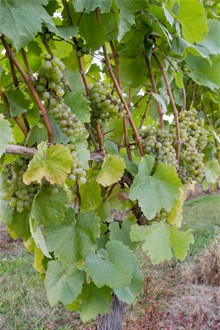
Pinot Grigio has sprung to fame over recent years, and has single handedly accounted for the dramatic rise in sales of Italian white wine worldwide. It is grown increasingly all over the world, but its heart is in Europe, with Italy and Alsace at its core.
Pinot Grigio and Pinot Gris are the same grape, a white mutation of Pinot Noir, and have no technical difference whatsoever - but the names are intentionally used differently. This is because it’s a grape variety that can adopt many guises, from light, peachy, and fresh (Pinot Grigio), to weighty, aromatic and complex (Pinot Gris). This depends entirely on where and how it is grown.
Historically, it was made in the Pinot Gris style, producing rich, structured, aromatic dry whites with notes of ginger, stone fruits and spice from Alsace, where it was known as Tokay. Nowadays the more popular style is Pinot Grigio, making light, soft, relatively neutral wines with green apple, lemon and floral flavours, chiefly from northern Italy. That is essentially the key difference. As a rule of thumb, Grigio is more light and simple, Gris is weightier and more complex.
Still, nowhere is it more popular than from Italy. The lure and success of sales of Pinot Grigio is so strong, that producers are even managing to make wine from this relatively delicate grape variety, as far south as Sicily. This is why choosing wine carefully is so important – sales successes have crept in over quality. You have to be careful of the bland, dull, flat Pinot Grigios that are everywhere!
How can you avoid that? Simple. Just look for Pinot Gris on the label instead. These wines are considerably more complex, more food friendly and more intensely flavoured. Pinot Grigio is arguably easier drinking and good for crowd-pleasing, but the low price point really sets them out as entry level wines and that is just what they are. Pinot Gris is generally more expensive, but nothing at all extreme which actually helps it represent better value for money too.
What Does Pinot Gris Taste Like?
It is a grape that produces a variety of styles of wine and, for the Pinot Gris style in particular, performs best in cool climate regions where it retains freshness and acidity to balance the fruit intensity. Pinot Grigio is grown prolifically in north eastern Italy, through the regions of Venezie, Friuli, Lombardy and Alto Adige, and is also now planted much further south, although struggles to retain freshness here.
Still, in the northern regions you can find some exceptional makers of the Pinot Gris style too. Alsace is however the natural modern day home for Pinot Gris, making rich, powerful, aromatic wines ranging from very dry to very sweet dessert wines.
It has also reached the New World, found in both Gris and Grigio forms in South Africa, Chile and Argentina, and is also performing well in Washington State and Oregon. But, Pinot Gris is probably most settled in Australasia, both in the relatively cool Victoria region of Australia, and in New Zealand, where it is becoming one of the most popular grape varieties planted.
This is about Pinot Gris, so we will ignore the gentle, easy-drinking Grigio style of Italy. Instead, let's focus on what makes Pinot Gris so Gris.
In Alsace, the most common style is highly aromatic and bone dry, where fruit and aromatic intensity is met with natural high acidity. They are spicy, full-bodied with low acidity and a weighty, almost oily texture. Fruit can be tropical (mango, melon), citrusy and floral. Up until 2007, Alsace also produced a dessert wine known as ‘Tokay, a lusciously sweet dessert wine from late ripened, shrivelled, intensely sweet grapes. They still make them like this, just without the potential crossover confusion with Hungarian Tokaji. These have the tropical, ripened fruits of Pinot Gris with the addition of honey, apricot, marmalade, ginger, beeswax, and candied citrus peel.
In Germany, it is typically made more textured, dry and full-bodied than Italian Pinot Grigio, but more savoury and acidic than the Alsace style. Expect pear, green apple and even walnut with these.
New World styles of Pinot Gris vary, with some producers picking up on the Italian style but using slightly misleading naming conventions. Generally speaking though, a Pinot Gris from the New World will be in Gris format. New Zealand Pinot Gris are full, spicy and flinty with aromatic instensity and usually a touch of the off-dry about them. Australia is quite good at keeping to naming conventions, flitting between Gris and Grigio as you'd expect. Californian Pinot Gris is usually more akin to Grigio, so be wary if you aren't looking for that style. And, the rest of the New World is generally pretty good at keeping Gris to Gris characters and Grigio to Grigio too.
What to pair Pinot Gris with?
The richer, fuller styles from Alsace and New Zealand are superb food wines, especially with anything vaguely spicy. Their natural aromatic style, and slightly off dry edge make them a natural match for Thai and other oriental cuisine, mild curries, ginger and coriander baked salmon, and chilli- spiced dishes. These wines also work extremely well with washed rind and soft cheeses, especially rich, more pungent ones.
In the States, Pinot Gris only really found a footing thanks to marketing it to salmon traders as a good match with fish. So, fix it with your salmon too!
In its sweetest guise, as a dessert wine, it is superb with crème brulee, lemon or apricot tart and citrus fruit based desserts, as well as strong blue cheeses.