The Argentinian Wine Scene
Argentina is a country of great excitement and interest as far as wine is concerned. With an almost perfect climate and location and a fascinating breadth of grape varieties producing great quality wine, it’s a wonderful country for wine production.
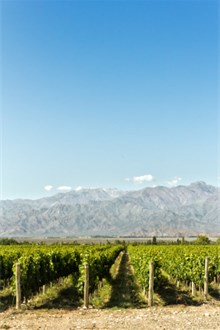
Up until the early 2000s, Argentinian wine mainly thrived on its strong domestic market. It had struggled to establish itself on the international scene for a while, largely due to lack of public knowledge and competition from huge Australian brands. However, the weak Peso meant that Argentine goods were cheap to export at this time and that really made all the difference for encouraging consumers to explore it.
It's success exploded with Malbec and that is the grape it is still very much dependent on. Whilst it is a French grape, Argentina is the place that has established its global reputation with the greatest zeal. It helps that it is perfectly matched with Argentina’s other ‘national’ consumable commodity, beef. There are murmurings that the Malbec bubble will burst and consumers will move onto another grape and country at some point, which will cause huge problems for the wine industry, but not yet. And, to combat this, Argentina has been establishing a reputation for other varieties and fine wines such as Cabernet Sauvignon, Bonarda and Chardonnay. This not only shows their diversity, but also that they are so much more than just a table wine making country.
A Little Argentinian Wine History
The first vines were planted in Argentina back in the mid 16th century during the Spanish colonisation of the country, and winemaking was introduced by Christian missionaries. Argentina declared independence in 1816 and soon began attracting European migrants from Spain, Italy and France in particular, bringing their wine making traditions and culture with them. Argentina also managed to escape the phylloxera epidemic at the time it ravaged European vineyards, encouraging more immigration from those who had lost their livelihoods in the late 1800s and early 1900s.
In the early 20th century, Argentina was one of the 10 richest countries in the world, with a thriving wine industry. This declined during the mid 20th century as Argentine isolationism, effects of the Great Depression, war and the military dictatorship years led to the industry becoming more insular, with the vast majority of production being consumed domestically. These domestic grapes were Cereza, Criolla Grande and Criolla Chica, and white Pedro Giménez, which you seldom see on export markets but are still very important in the domestic market today.
By the 1970s, domestic consumption was on the decline. But, Argentina's return of democracy and open economy gave wine producers, most famous of whom was Nicolas Catena, the means to focus on export markets and begin making wines of quality rather than quantity. Chilean success on the export market was also a good driver and a number of Australian and European winemakers moved to Argentina. The modernisation began and Malbec hit big in the 2000s.
Like its neighbour Chile, Argentina is one of the very few wine producing countries where phylloxera has not struck in any great force, meaning you can find a number of vines that have not been grafted onto American rootstocks.
Argentinian Wine Regions
Argentina is a huge country across 20 degrees of latitude, and has some of the most extreme vine growing conditions in the world. From semi-arid and almost desert-like conditions at latitudes similar to the Egypt, Argentina is also home to some of the highest vineyards in the world, near Salta, with the world’s highest vineyard sitting at 3000m above sea level.
The snowy and majestic Andes Mountains play a key role, influencing the dry climate, protecting the vineyards, yet also providing irrigation. The influence of ‘La Zonda’, a strong wind that blows down across the vineyards, can also cause substantial damage, but also protects the vines from disease.
The main wine producing regions of Argentina lie in the far west of the country, very close to the Andes mountains, and stretch over 2000km from north to south. Mendoza is the key one, which accounts for over two thirds of total production, followed by San Juan and La Rioja to the north. As winemakers and viticulturists explore, further regions have been identified and discovered, including the very high altitude areas of Jujuy, Catamarca and Salta in the far north east, and the very cool climate areas of Patagonia, Neuquen, and Rio Negro south of Buenos Aires.
Below are the key Argentinian wine regions which you can explore further by clicking on.
Mendoza is Argentina's main wine producing province, with Malbec making over half of production. The region is generally warm, with higher vineayrds stetching up to 1500m above sea level creating the most expressive and impressive wines. There are many renowned regions within Mendoza that have planted its name firmly on the wine map.
San Juan and La Rioja
- San Juan lies to the north west of Mendoza, and is the second largest wine producing region of Argentina, though not even at a third of Mendoza. The climate is hotter and drier on the lower vineyards, but with elevation reaching 1500m above sea level where exceptional wines are made. The Pedernal Valley is distinguished here for this reason. The region is best known for Syrah, the most planted grape, Malbec and Bonarda, and also historically fortified and sweet wines.
- La Rioja is Argentina's third largest wine producing region, located north of San Juan, and the one with the longest history, having been established by the Spanish missionaries. It produces mainly reds from Malbec, Cabernet and Syrah, and whites from the traditional white grape variety Torrontes. It is also home to the largest producer of Fairtrade certified wines in the world, La Riojana.
Salta is one of the most extreme wine making regions in the world. It is one of the closest to the equator (24-26 degrees latitude) and has extreme altitude up to 3000m above sea level. The iconic Bodega de Colome, pioneers of high altitude winemaking, are found here. This altitude/sunlight combo creates full-bodied and concentrated wines, thanks to the high sunlight levels, that are also extremely fresh and fragrant at the same time, due to high acidity retained from the cooling influence of altitude. Malbec, Syrah, Tannat and Bonarda are the key black grapes, but Torrontes is perhaps the most famous, making floral white wines.
- Torrontes in particular excels in the GI of Cafayate.
Recent years have also shown the development of wine areas further south, down in the cool climate regions of Patagonia, where the climate is in total contrast to the northern vineyards of Salta and San Juan, and even very different from Mendoza too. Although altitude is much lower here, Patagonia's southerly position brings low temperatues and less sunlight, but a longer growing season.
It has begun to establish a reputation for high quality wines made from Pinot Noir, Cabernet Franc, Merlot, Semillon, Chardonnay and Riesling. Malbec is the most planted grape, making floral styles. There is also plenty of sparkling too.
- The main sub regions of Patagonia are Rio Negro and Neuquen, home to the southernmost vineyards in South America, Bodegas Otronia, which are over 1500km south of Mendoza.
Key Argentinian Wine Grapes & Styles
Argentina produces a broad range of grape varieties, from international styles to their own grapes. Historically, production was dominated by pink criolla varieties, such as Cereza, Criolla Grande and Criolla Chica (which is better known as Pais in Chile), which make light, inexpensive wines for the domestic market. About 20% of plantings are dedicated to these varieties. This number reduced thanks to a shift to quality winemaking and exporting.
Here is a summary of the main grapes, which are used for quality, bottled wine production:
White Grapes
Torrontes
Torrontes came about as a crossing between Criolla Chica and Muscat of Alexandria. There are actually three varieties that fall under this umbrella: Torrontés Riojano, Torrontés Sanjuanino and Torrontés Mendocino. The best is Riojano and is the second most widely planted white grape variety in Argentina, particularly in San Juan, La Rioja and now Mendoza. Where it really shines however is Cafayate in Salta province.
It produces very floral, muscat – style wines, with rose petal and honey aromas, and a ripe, spicy, off dry flavour, reminiscent of Gewurztraminer in many respects. Most is made unoaked and to be drunk whilst young and fresh, but some producers ferment a portion in oak to create more age-worthy wines. It is also increasingly been found in blends with Sauvignon Blanc, or used to make dessert wines.
Chardonnay
Probably the best known white grape variety in the world is planted in large volume across Argentina and thrives superbly, with some high quality wines, especially from the higher altitude, cooler climate regions, such as Tupungato.
Argentina produces every style of Chardonnay imaginable: fresh and unoaked, lightly oaked and heavily oaked styles. It is partly region dependent what style the producer goes for, with cooler climates tending to lean into the fresh and unoaked style and warmer regions the oaky style.
The oaked styles are rich, bold, full of toasty, tropical fruit, and a creamy vanilla edge; the newer, fresher styles, celebrate the pure fruit quality, with lively, citrus-streaked white peach, creamy fruit.
Sauvignon Blanc
Sauvignon blanc used to struggle in Argentina, often compared less favourably with the high quality Sauvignons, which its neighbour Chile has been producing consistently for a number of decades. Until the potential of higher altitude and cooler climate regions were explored with Sauvignon, the hot temperatures of Mendoza did little to encourage the delicacy, freshness and natural acidity of the grape.
However, Sauvignon blanc is now coming into its own, and producing, verdant, fresh, zesty whites, with a ripe, tropical edge. The best Sauvignons come from the south, in Patagonia, and also from the very high vineyards in Salta and Jujuy.
Pedro Gimenez
The most widely planted grape variety in Argentina is used largely for domestic bulk wine production, making neutral, simple wines. However, increasingly with Argentina's quality drive, it has been used experimentally in cool, high altitude regions such as Uco Valley, to produce aromatic and fruity, quality wines.
Red Grapes
Malbec
Without any doubt, the signature grape of Argentina. Mention Argentinian wines and Malbec is the automatic wine association. Originally from southern France, Malbec cuttings were brought over before phylloxera hit Europe giving Argentina a better diversity in quality of vines. Argentinian Malbec has been found to have smaller berries and bunches, as well as softer tannin than French Malbec vines.
Malbec is a small, thick skinned grape, with inky black juice that produces high tannin, deep coloured, full-bodied wines with ripe black fruits. In the hot, dry sunshine of Argentina, it matures perfectly and yields, big, bold, fleshy, yet very juicy, spicy and intensely ripe wines. It is usually aged in oak to intensify its powerful, yet approachable character. Malbec price ranges from cheap into the hundreds, showcasing quite how good their winemaking has got.
It is also often used in Bordeaux style blends or with Bonarda and/or Syrah, ranging again in quality from inexpensive to the super premium.
Research has led to better understanding of microclimates' effects on the styles of Malbec, and many producers will blend Malbec from different regions or parts of the same region to take advantage of this. That said, single vineyard styles are becoming more common as producers focus on their individual terroirs.
Bonarda
Originally from northern Italy, Bonarda was brought to Argentina by Italian immigrants during the war period. It is mainly planted in San Juan and warm parts of Mendoza, owing to the fact it needs warmth to ripen properly. In the wrong conditions, it can produce green, vegetal wines that are not desired.
In the right ones, it produces very fruity, intense, yet remarkably soft reds, with gentle red and black fruit flavours. Producers have to be careful with use of oak as it can overwhelm Bonarda's soft nature. It is often used in blends with Malbec and Cabernet Sauvignon.
Some more complex Bonarda's from old vines and low yielding vines have appeared in recent years with riper black fruits and spicy characteristics, coming from areas like Lujan de Cuyo and Maipu. At the moment, prices for these are very good as Bonarda hasn't yet reached international popularity and Malbec somewhat has the spotlight still.
Syrah
Syrah is well suited to the hot climate of Argentina, particularly in places like Mendoza and San Juan (where it is more planted than Malbec). In these warmer area, it produces, big, bold, spicy wines, packed with dense fruit, rich mocha flavours, high alcohol and an intense character. In cooler regions, it is making exceptional northern Rhone style wines that are fresh and elegant.
It is also used as a key component to a classic Cab/Shiraz blend, adding the richness, spice, and ripe plum and mocha edge to Cabernet’s more overt fruitiness. You'll also find it blended with Malbec, Bonarda and Merlot.
Cabernet Sauvignon
The ripe, minty, blackcurrant characteristics of Cabernet Sauvignon ripens to perfection in the right sites. It is susceptible to underripening if in the wrong location so site selection is important.
It is typically blended with Malbec, a combination that has created many of Argentina's very best wines. However, there are now also some superb ripe, high tannin single varietals with blackcurrant and blackberry fruit and spicy notes without a marked herbaceous character. If you prefer the more herbaceous style, there are some great wines produced in the higher altitude regions such as Cafayate and Tupungato too.
Merlot
One of the classic grape varieties in traditional Bordeaux blends, the Merlot grape is extremely well suited to Argentina, with its hot, sunny climate – the only danger is that the merlot is an early-ripening variety, so needs to be picked relatively early, before the grapes over ripen. It’s rich, chocolatey, plummy, early-ripening fruit make for deliciously ripe, intense, velvety reds, but it is still also used a great deal, in a blend with Malbec or cabernet Sauvignon, to make a Bordeaux-style blend, although richer, more powerful and more immediate.
Pinot Noir
With its traditional hot climate, Argentina was traditionally not the right place to grow Pinot Noir; the heat did not suit this sensitive and temperamental grape variety. However with the development of vineyards at very high altitude in the north, and especially with the discovery of the wealth of potential in Patagonia, some interesting and high quality wines are now being produced. Rio Negro and Neuquen, in particular, are at similar latitudes to Gisborne in New Zealand, and Pinot Noir is now thriving in this area.
These wines have a softness, yet a rich silkiness of fruit – gentle tannins, and rich, raspberry fruit flavours, together with a sublime elegance and generosity of fruit – probably the most seductive of all red wines.
Argentina is also producing an increasingly wide variety of other grape varieties. The grapes include:
- Chenin Blanc – lively, guava and apricot fruit scented dry white.
- Pinot Grigio – peachy, delicately scented, dry whites.
- Ugni Blanc – aromatic, zestily citrussy dry whites.
- Viognier – full-bodied, aromatic whites.
- Riesling – soft, aromatic, with pure lime streaked fruit, from higher altitude vineyards.
- Semillon – fresh, vibrant, with a baked pear and lime zest character
- Sangiovese – a lighter, fresher style of red, full of herb dusted, black cherry fruit.
- Cabernet Franc – distinctive, concentrated red fruited wines.
- Petit Verdot – Herbal single varietal wines, or great component of Bordeaux blends
- Tannat – a tannic, heavy red with dark fruits.
- Tempranillo – the classic grape of Spain is doing very well in Argentina, with its ripe, soft, yet full on, red berry fruit style, and a vanilla, mocha edge.