A Brief Guide To American Wine
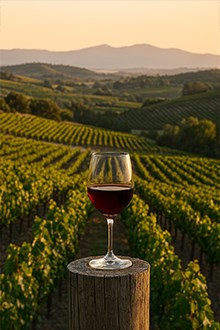
Whilst there is still the sense that US wines lack the history and heritage of the old world, not to mention the damaged relations and therefore global opinion on American goods brought about by the Trump presidency, the USA is an undeniably important wine producer - the 4th largest in the world. Californian wines are the most dominant, accounting for around 85% of production. Washington, New York, Oregon and more recently Virginia make up virtually all the rest, though vineyards stretch over 30 states with wineries in 50. Whatever your opinion, America has embraced wine in a big way.
Historically, in the USA wine is intrinsically linked to colonisation because it was brought over by European settlers who were establishing their culture in conquered lands. Enslaved peoples also worked in the vineyards, particularly in California. Interestingly, to this day Californian wine relies very heavily on cheap Mexican labour in order to keep wine prices affordable. With recent immigration crackdowns many vineyards have been left unpicked because the labour simply isn't affordable and/or available. This is having an impact and causing a seismic shift in the Californian wine industry, with various vine pull schemes underway to redress the huge oversaturation of vineland and supply they have.
After prohibition decimated the industry in 1920, it wasn't until the late 40s and 50s that large companies such as Roma Wines of Fresno and Gallo of
Modesto began to emerge. Roma Wines is long gone, but Gallo is a name we are all familiar with. These large companies were the herald of large volume brands that used European names to appeal to consumers (Pink Chablis, California Burgundy etc). From here new wineries began to spring up across the US as demand grew and the rest is history. American wine has come an incredibly long way in the past 50 years.
In fact, the US is the world's largest wine market with the most imports and consumption by volume, but a low per capita drinking rate - this is simply due to the sheer size of the country. There are over 11,000 wineries operating in the country although 90% sold comes from the largest 50. The largest is of course E & J Gallo!
The market is actually rather tangled up in complex legislation, as a bit of a prohibition legacy trying to prevent saloon houses, that seriously limits the potential of smaller wineries without big budgets to navigate the minefield of rules and regulations. It is called the Three-Tier system, and is implemented on a state-by-state basis aiming to prevent direct sales from the producer/supplier to the retailer to avoid producer monopolies and increased prices. In today's world, this really just damages the industry. But, this isn't a legal blog, you are here to find your favourite American wine regions!
American Wine Regions
American wine regions are designated into American Viticultural Areas (AVAs), regions with unique geographical and climactic features. Some overlap states such as Columbia Valley but most are small areas within one. Within some of the larger AVAs, you will also find sub AVAs, much like a cru in France, to further denote regions of quality.
North Coast AVA
-
Mendocino County AVAs:
- Anderson Valley AVA
- Redwood Valley AVA
- Yorkville Highlands AVA
- McDowell Valley AVA
- Potter Valley AVA
- Cole Ranch AVA
-
Lake County AVAs:
-
Sonoma AVAs:
-
Napa Valley AVAs:
Central Coast AVA
Central Valley AVA
Sierra Foothills AVA
South Coast AVA
Willamette Valley AVA
Southern Oregon AVA
- Umpqua Valley AVA
- Rogue Valley AVA
Shared State AVAs
- Walla Walla Valley AVA
- Columbia Gorge AVA
- Columbia Valley AVA
Columbia Valley AVA
- Walla Walla Valley AVA
- Yakima Valley AVA
- Red Mountain AVA
- Rattlesnake Hills AVA
- Horse Heaven Hills AVA
- Wahluke Slope AVA
AVAs Outside Columbia Valley
- Columbia Gorge AVA
- Puget Sound AVA
New York State
Finger Lakes AVA
Long Island AVA
Hudson River AVA
Wines are of course made and grown across most states, but the majority is for local consumption and not often seen outside of state, let alone on the export market. These are just some names worth paying attention to and searching for!